Insights From Our Consultants
Toby Massengale on what it takes to build a business that can scale beyond the owner.
I owned and ran a landscape company for a little over twenty years, and there was a stretch in the middle of that where I was working fourteen-hour days and still felt like I never actually finished anything. I wish somebody had told me a lot earlier that what I was experiencing wasn't unusual. Instead, after years of frustration, I eventually learned there was a name for that stuck, chaotic feeling when whatever got you here stops being enough to carry you any further: Hitting the Ceiling. And for a growing business, hitting it at some point is inevitable.
When Hard Work Wasn't Enough
I knew that we'd outgrown the way we used to run things, that whatever worked when we were smaller had simply stopped working as we got bigger and I knew the answer wasn’t to simply hire more people, but I wasn’t sure what to do or how to fix it. So I read a lot of books, hired consultants, and joined a CEO peer group. It was only after all that I realized the real issue was that we lacked the systems and processes we needed to get everyone going in the same direction. A handful of us carried the whole business in our heads, how we treated customers, how a job actually got done start to finish, what "done right" meant, and that held together fine right up until we had more crews and more accounts than a small group of people could carry through memory and sheer effort alone. Because none of it was written down, decisions that should have belonged to somebody else's role kept landing on me or one of a handful of other people, simply because we were the only ones who knew how the business was actually supposed to run. And when there were more issues to solve than there were hours in the day to solve them, in the right way, they got solved another way, or not at all. The sheer willpower that had served us so well early on simply became not enough.
I see that same pattern constantly now with the landscape company owners I work with. It's almost never a talent problem or a work ethic problem. People in this industry work as hard as anyone I've ever met. What's usually missing runs underneath all that effort, things like a clear sense of where the company is actually headed and a plan to get there. Common values the team is living by day to day and accountability for who owns what. A real definition of who their ideal client is and the processes required to serve that client and run the business and a long-term goal that gets people genuinely excited instead of just worn down. Those processes are especially important as a company grows, because they're what allow the business to operate consistently without everything depending on a handful of people. All too often, companies make the mistake of thinking software will solve the problem, when it can actually make the problem worse. Until you have the right foundation for the business, software can simply make a poorly run company run poorly faster. What you need first is a business operating system that aligns the leadership team and gives the rest of the organization a clear way to move forward together.
Finding a Better Way to Run the Business
If I could go back and give myself one piece of advice at that stage in my company's growth, it would be to install a real Business Operating System a lot sooner than I actually did, something like EOS, the Entrepreneurial Operating System, which is really just a structured way of getting a leadership team aligned, accountable, and rowing in the same direction instead of everyone individually white-knuckling their way through the week. EOS actually breaks the climb out of that stuck feeling into six key components, and what they all have in common is that none of them require talent you're either born with or not, just discipline. They're learnable, which is exactly what makes them useful instead of just aspirational. What they gave me, once I finally leaned on them, was a proven path instead of having to invent my own from scratch, which is exactly what my team and I spent years doing the hard way.
“Software can simply make a poorly run company run poorly faster.”
What I Look for in Leadership Teams Today
When I'm working with a leadership team today, I can usually tell the shift is real before anyone tells me it is. They start meeting on an actual cadence: weekly, quarterly, annually, instead of only huddling up when something's already on fire. where team members start saying the uncomfortable thing out loud in the room instead of nodding along and quietly disagreeing on the way out. Decisions get made faster, and once they're made, people commit to them, even the ones who argued the other side ten minutes earlier, because the team decided on purpose to operate differently than they had been. As one client put it, “the chaos just starts to settle”.
There's a stat people repeat all the time, that eighty or ninety percent of small businesses fail within five years, and it just isn't true. According to the U.S. Small Business Administration, the real number is closer to half. That's still a lot of businesses that don't make it, but survival was never really the hard part for the companies I work with, they'd already cleared that bar. What's harder is what comes after. U.S. Census Bureau data shows that at any given time, only about nine percent of U.S. businesses have reached a million dollars in annual revenue, and it only gets rarer from there. Surviving proves you can keep the doors open. Scaling proves you built something that can run without you personally carrying all of it. Getting to that first million is usually about the person running the business, their hustle and their instincts. Getting past it is a different problem, and it has almost nothing to do with hustle, it takes an organization that can run without everything passing through one person, which is exactly what EOS is built to create
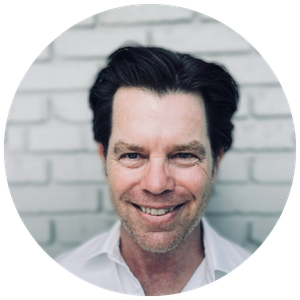
ABOUT THE AUTHOR
Toby Massengale
EOS & Business Operations Consultant | Mours Enterprises
Toby works with landscape company leadership teams to build the operating foundation that makes growth and the technology meant to support it, actually work.
Growing the Business Was Only Part of the Challenge
What I learned the hard way about hitting the ceiling, and what it actually took to get past it.